
HyperCV's Source-of-Truth Resolver: Find the Real Job Post, Not the Board Echo

Every job seeker has hit this wall.
You find a role on LinkedIn. The description is three bullet points and a vague mission statement. You apply through the board's one-click flow. You hear nothing. A week later you discover the company's own careers page has the same role — with the full tech stack, the team page, the salary band, and a "Apply directly" button that bypasses the ATS firehose entirely.
You applied to the echo. You should have applied to the source.
The problem with board listings
Boards are aggregators. They scrape, normalise, and re-host — and in the process they:
- Lag behind the employer's own page (sometimes by weeks, sometimes after the role is closed)
- Strip context — the team, the stack, the comp band, the "why we're hiring this role" paragraph
- Hide the direct apply path behind their own form, so your application lands in an ATS pile keyed to "applied via Indeed"
- Mis-tag seniority, location, and remote policy
The employer's own posting is the ground truth. Every other version is a lossy copy.
The agentic move
A single LLM call can't solve this. You can't prompt your way to a URL that may not exist yet. What you need is a small agent with tools: pattern matching, search, scraping, and an LLM to disambiguate when the deterministic path fails.
HyperCV's resolver runs this loop the moment you paste a board listing:
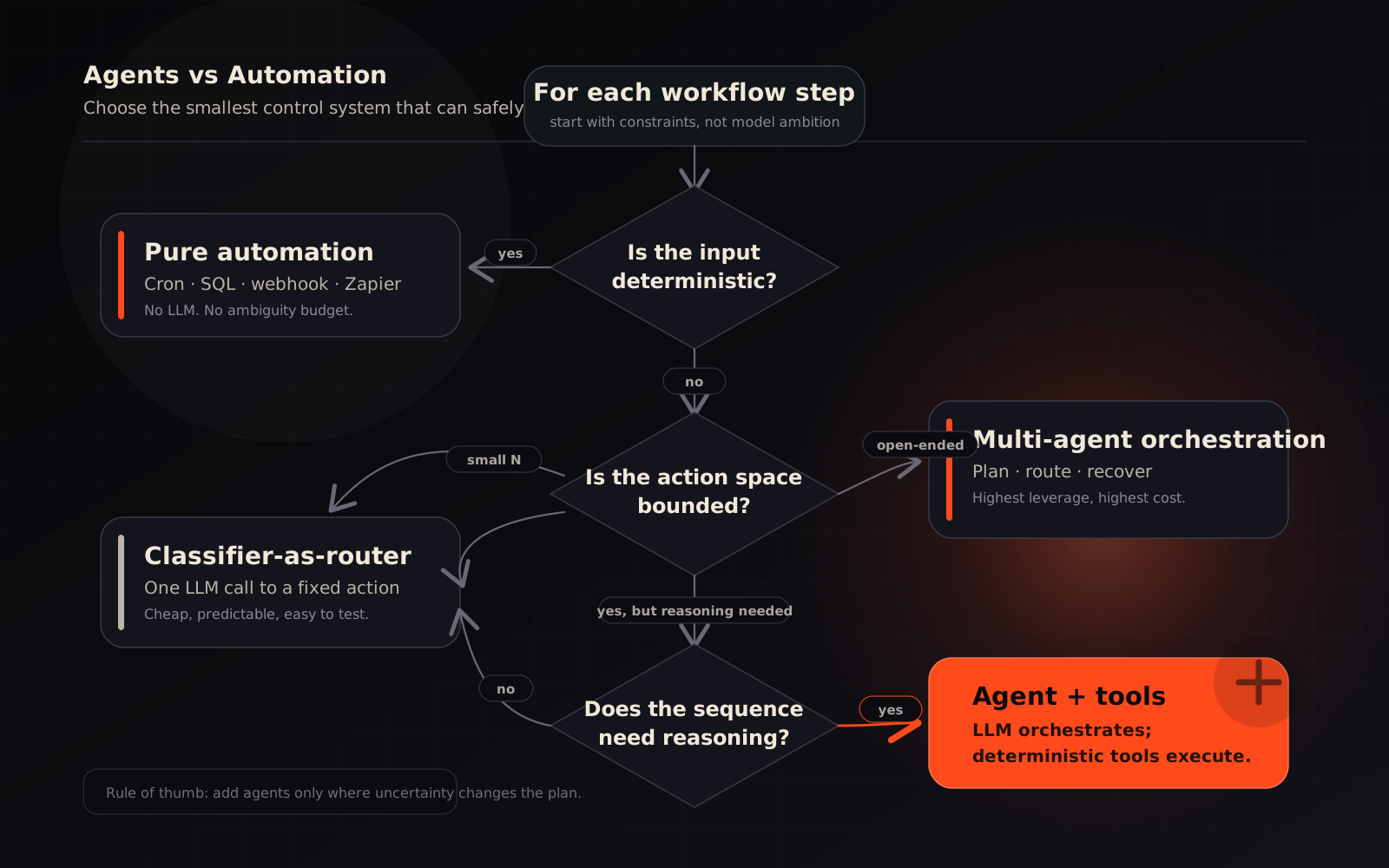
The resolver only becomes agentic where uncertainty changes the plan. Deterministic steps stay deterministic; the agent earns its place at the reasoning boundary.
Why this matters to you
Better tailoring. A CV tailored against three bullet points is a guess. A CV tailored against the real post — with the actual stack, team shape, and project context — is an argument. HyperCV's score moves significantly when the input quality jumps.
Direct apply path. Most resolved posts give you the employer's own apply URL. That's a different pile of applications than the ATS aggregator pile. Often a smaller one. Often read by someone who actually works on the team.
Freshness signal. If the board has it but the company page doesn't, the role may already be filled. If the company page has a newer revision than the board, you're looking at the version recruiters actually care about. The resolver tells you which.
Salary and comp band. Many US states and EU countries now require comp disclosure on the employer's own posting — and boards often strip it. Resolving the source surfaces information the echo hides.
What makes it agentic (and not just a script)
A script would try one URL pattern and give up. The agent:
- Picks its tools by context — ATS pattern first (cheap, deterministic), search + scrape only when needed (slow, costs an LLM call)
- Reasons under uncertainty — when the company page lists eight similar roles, the LLM disambiguates by title nuance, location, and seniority signals
- Caches its successes — once it learns Stripe uses Greenhouse and that "Senior Engineer, Payments" matches a specific URL pattern, the next user resolves in milliseconds
- Fails gracefully — when confidence is low, it surfaces the board listing with a flag rather than silently shipping a wrong URL
This is the difference between an LLM-in-a-textbox and an agent: the agent is allowed to look things up, retry, and admit when it's not sure.
The bigger pattern
This resolver is one node in a larger agentic flow HyperCV is building toward — discover roles, resolve them to source, tailor the CV, research the company, draft outreach, track replies. Each step is a small agent with tools. The user sees a clean end-to-end "land interviews" loop. The model sees a careful pipeline where each step's output is the next step's input.
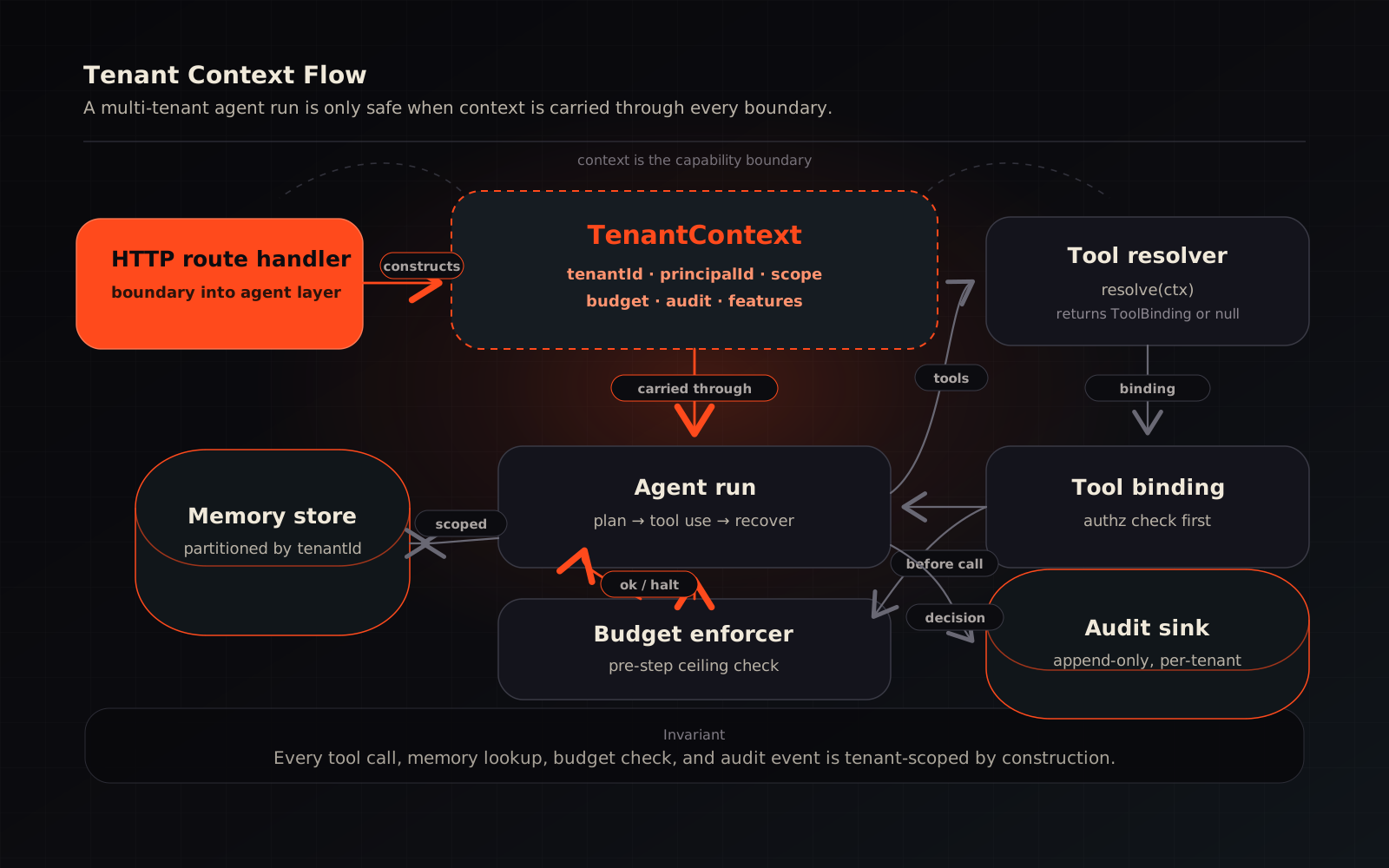
At product scale, the agent loop has to carry tenant context through every boundary: memory, audit, authorization, budget, and tool access all become part of the same safety contract.
Single-shot LLM calls already cover the easy parts of CV tailoring. The interesting product surface is the work that's only possible with state, tools, and a loop.
The real job post is the first thing worth fetching properly. Everything downstream gets better when the input is the source, not the echo.
Try it at nextrole.hyperdrift.io — paste any board listing, see the resolved source.
Get HyperDrift signal — courtesy of intel.hyperdrift.io